
CCTV survey: $300–$750
Stands alone and is credited against the works by most operators. Without it nobody can price a liner honestly.
Relining turns a recurring drainage problem into a finished one. The joints that roots come through are sealed along the whole run, so there is no way back in, and nothing above the pipe gets disturbed to do it.
The failure that brings most people here is not a broken pipe. It is a joint. Older drainage is laid in short lengths, so a single run has a great many joints, and after decades of ground movement and root pressure they open a fraction at a time until something backs up.
A liner seals all of them in one pass, which is why it changes the pattern rather than resetting it. Cutting roots out clears the pipe and leaves the way in exactly as it was, and the interval to the next blockage is set by how fast they grow back.
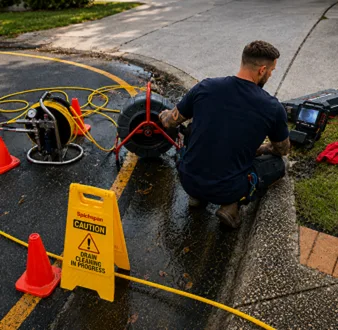
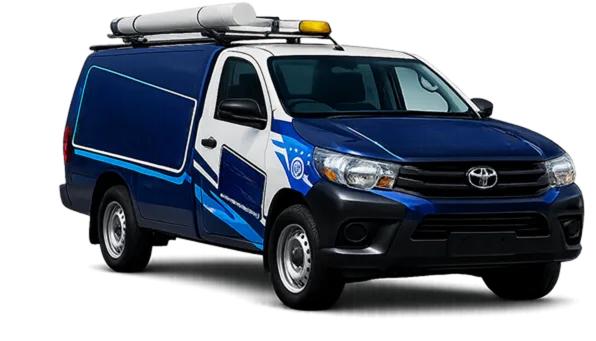
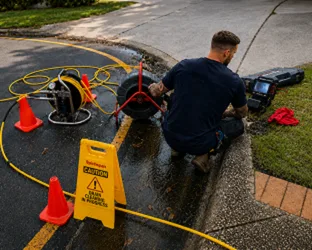
Blocked gully traps on older homes, and the shared drainage in the newer unit blocks near Gordon station, both need a camera and the right access to clear properly.
In a strata building the line between lot property and common property decides who pays, and it is worth settling before a quote rather than after. A branch serving your lot alone is generally yours; the stack it joins and anything in common property generally is not.
Relining changes the arithmetic here because it is usually cheaper than the alternative for a shared line, and because it can be done without opening ceilings in the lots below the fault. That tends to make the approval conversation shorter.
A listing does not stop you repairing a drain. What it restricts is change that is visible or that disturbs significant fabric, which is precisely what a trenchless repair avoids.
In practice that makes relining the path of least resistance on a listed or conservation-area property: nothing is removed, nothing changes above ground, and there is no reinstatement to get approved.
This is the honest limit of the method. A liner follows the pipe it is cured inside. If the run has sagged into a belly or lost its fall, relining seals it and leaves the shape exactly as it was, so the water still pools where it pooled before.
The steep, tree-lined blocks near Ku-ring-gai bushland send heavy-rain runoff surging through stormwater pits that silt up and back up.
On sloping ground that failure mode is common enough to check for specifically. Where the profile is wrong, the correct answer is excavation and re-lay of that section, and we will tell you so even though it is the more expensive quote.
Once is weather. Twice is a defect, and the second event is the point at which paying for a camera saves money rather than costing it.
What we are looking for is specific: a belly holding water, a joint that has opened, a section crushed by a vehicle crossing. Each has a different answer, and only one of them is relining. Knowing which you have is worth more than another clear.
Many of Gordon’s Federation and interwar homes off the Pacific Highway still run original clay pipework that cracks and sags with age.
Clay is rigid, round and predictable, and that geometry is exactly what a liner wants. The resin sleeve cures hard against a barrel that holds its shape, and the short pipe lengths that make clay joint-heavy are the same joints the liner seals in one pass.
So the material that causes the most recurring blockages in older streets is also the easiest to repair properly without digging. That is a genuinely lucky combination and it is why relining suits this housing stock so well.
On a clay line the barrel is usually fine. What has gone is the mortar or rubber ring at each joint, and there is one every few hundred millimetres, which is a great many small openings after sixty or eighty years in the ground.
That matters for the quote. You are not replacing a pipe, you are sealing a long series of joints, and a liner does the whole run at once rather than patching them one at a time.
Stands alone and is credited against the works by most operators. Without it nobody can price a liner honestly.
The usual Sydney range for domestic sewer. Access and junction reinstatement are normally quoted separately.
One defect in an otherwise sound run. The proportionate answer on stable ground, and the wrong answer on a line with twenty tired joints.
Where the camera shows the same failure repeating along the length. Ends the problem rather than relocating it.
The honest comparison. Cheaper on an open lawn, rarely cheaper under a driveway, paving or a building.
Figures reflect the 2026 Sydney market rather than a quote. You get your own number once we have seen inside the pipe. Figures here are indicative of the 2026 Sydney market rather than a quote from us, you get your own number as a fixed price before any work starts.

We find the fault, measure it from an access point, and check the fall is intact. That last check is what stops a liner being installed into a belly.
Per metre, with access and junction reinstatement itemised, and the excavation comparison alongside it so you can see both.
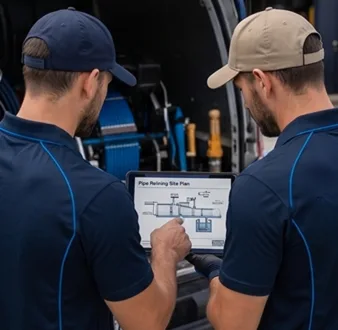
Clean, install, cure. One access point, one day for most homes, and no trench across the property.

Branches reopened, final footage, certificate and notification. Keep it with the property file, it is worth real money at sale.
Send it through and we will come back with what it is likely to be, what the survey costs, and whether relining is even the right conversation.
Call for the fastest answer, or send the form and we will arrange a camera survey before anything is quoted.

Leave your details and our local Gordon team will call you back fast.